 Word Tower
Seven steps
How test prep works
From the column of words the school sends home, to the morning of the test.
-
The list comes home
Ten words on a sheet in the school bag, or a photo of the board — and a date by which they have to be known.
-
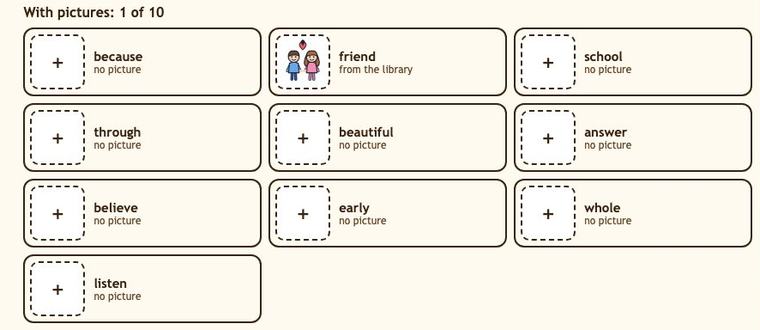
Paste it into 🎯 Test prep
A plain list, a table, or “word - translation” lines go straight in. If all you have is a photo of the sheet, a ready request for ChatGPT turns it into words and draws a picture for each.
-
Set the test date
The game counts back from it and spreads the new words, so every one is met before the test and familiar words turn into spelling practice.
-
The child climbs the tower
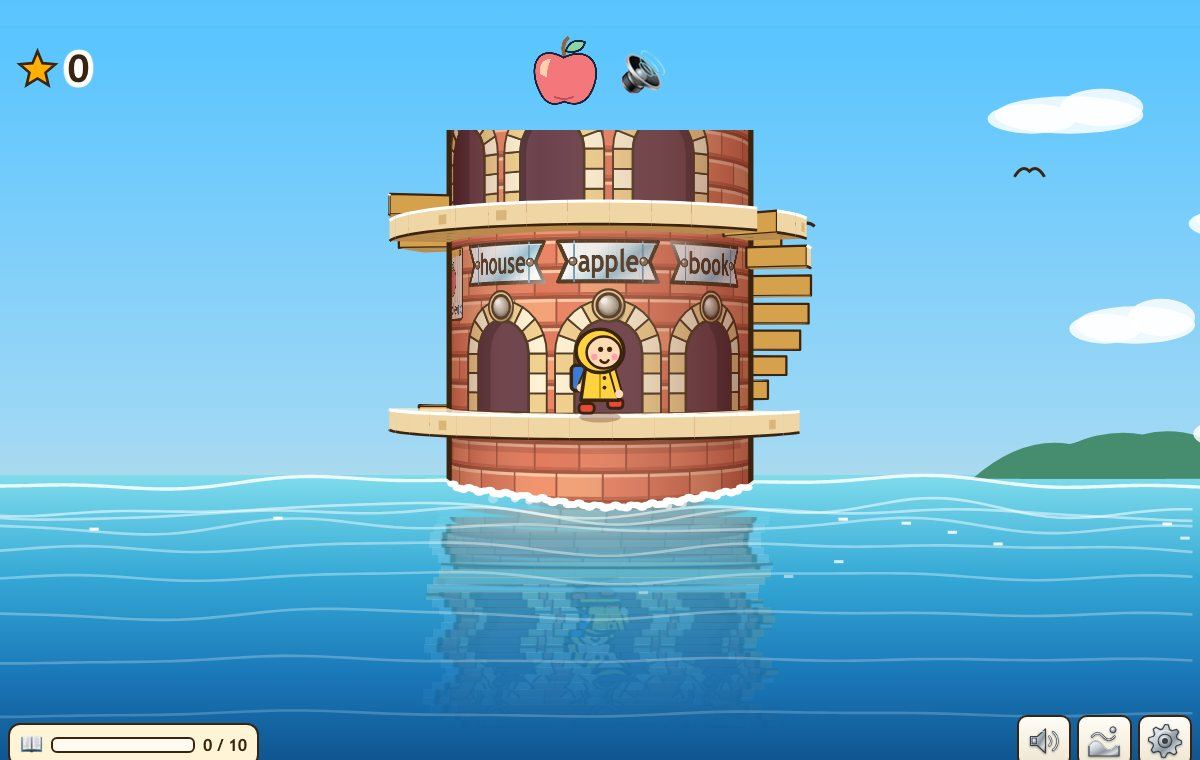
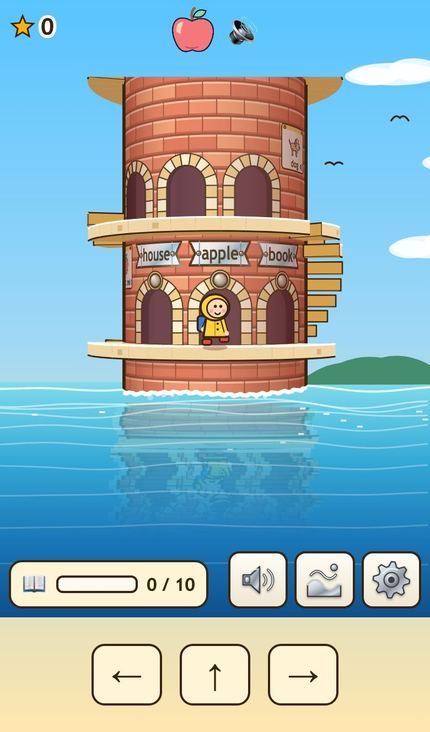
The words on the doors are this week's words. A poster shows the word and speaks it; the right door turns the tower to the next ledge, a wrong one stays shut and the word comes back later.
-
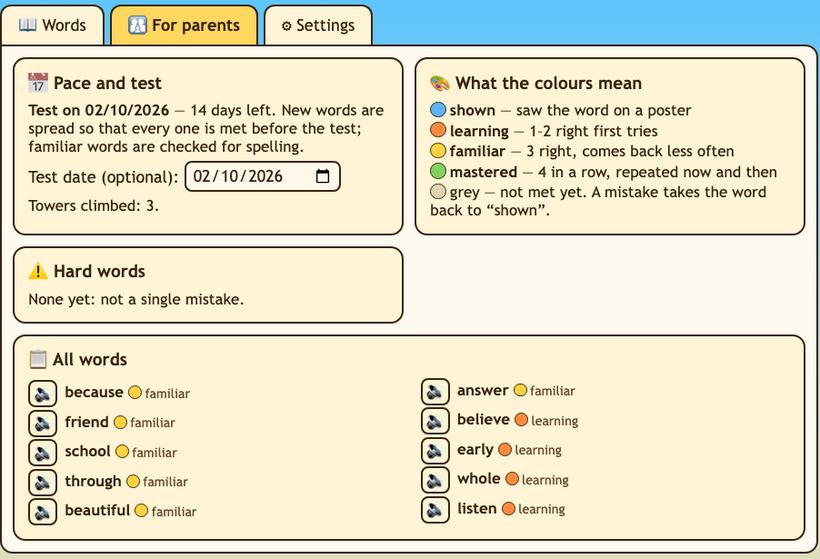
Watch the colours
Blue for shown, orange for learning, yellow for familiar, green for mastered. Hard words stand out on their own, and the days left before the test are counted for you.
-
Print the practice sheets
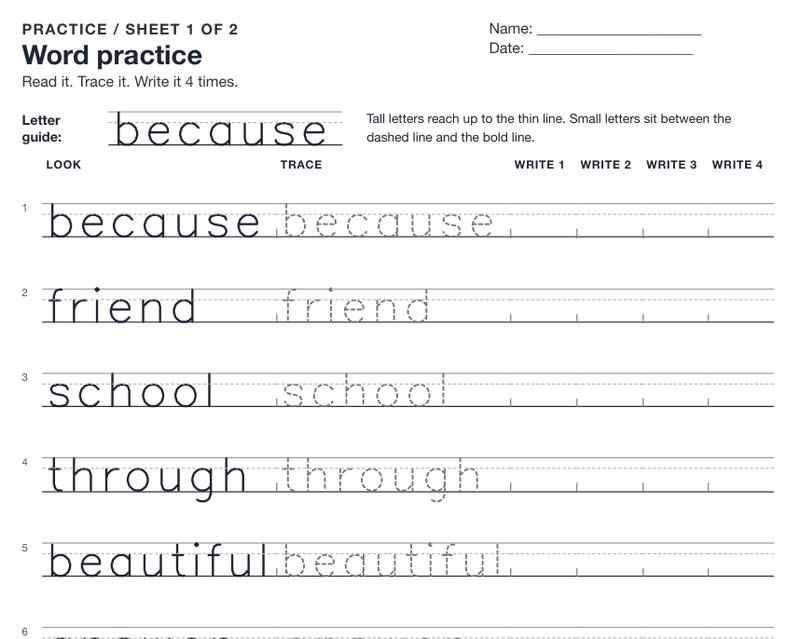
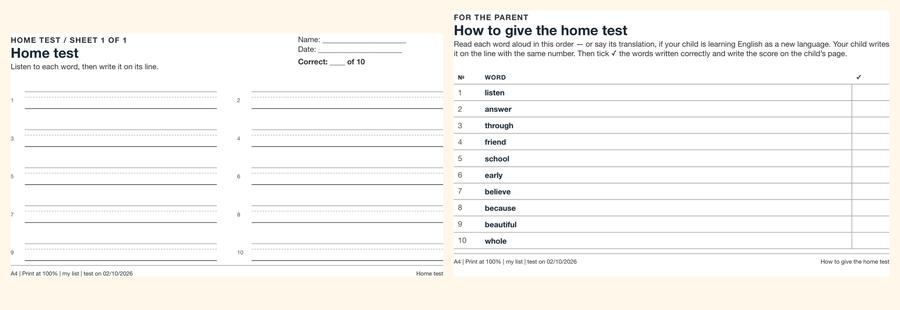
“Practice sheets + home test” on the parents’ page turns the same words into paper: look at the word, trace it along the dotted line, then write it four times, with a letter guide at the top.
-
Give the home test
The last printed pages are the test itself: “Home test”, numbered empty lines for the child, and “How to give the home test” for you, with the same words in a shuffled order to read aloud and tick.
The child goes to school prepared. Words that were hard come back sooner, words they know return less often, and every tower is built anew.
Beyond the test
What else it does
-
Everyday English words
Sets of the 10, 50 and 100 most useful words, with pictures, for a first English vocabulary.
-
Sight words to learn to read
The Dolch lists and the first 300 Fry words. The word is heard, and the child finds how it is written.
-
A page for parents
See which words are new, learning, familiar or mastered, which ones were hard, and how many days are left before the test.
-
Several children, six languages
Each child keeps their own words and progress. The game speaks to families in English, French, German, Russian and two kinds of Spanish (Spain and Latin America); outside English, a translation hint helps children who learn English as a new language.
Calm by design
- The challenge is the words, not the controls: no timers, no jumps to time, gaps are hopped automatically.
- Walk with the arrow keys, or with big on-screen buttons on a tablet or phone.
- Falling off a ledge costs nothing — a little submarine brings the hero back to climb again.
- No ads, no purchases, no tracking. Nothing to sign up for.
Chrome
In Chrome's side panel, next to homework
The same game runs in Chrome's side panel: one click on the toolbar icon, a tower beside the homework tab, then back to work.
Before you start
Questions parents ask
Does my child need an account?
No. The game works without signing up. Progress stays in the browser on your device.
Can I use our school spelling list?
Yes. Paste the list in Test prep — a plain list, a table or “word - translation” lines — and set the test date. The game spreads the new words so each one is met before the test, and you print practice sheets with a home test at the end.
Which sight word lists are included?
The Dolch lists (Pre-Primer, Primer, grades 1 to 3 and nouns) and the first 300 Fry words.
Can we practise on paper too?
Yes. Print a one-page word list for the fridge, or practice sheets where each word is read, traced along a dotted line and written four times — with a home test on the last page: empty lines for your child and a page for you with the words to read aloud.
Does the game have ads?
No. There are no ads, no in-game purchases and no tracking.
Is it hard to control?
No. The hero walks with the arrow keys or on-screen buttons and hops gaps by itself. The only challenge is remembering the words.