 Words Tower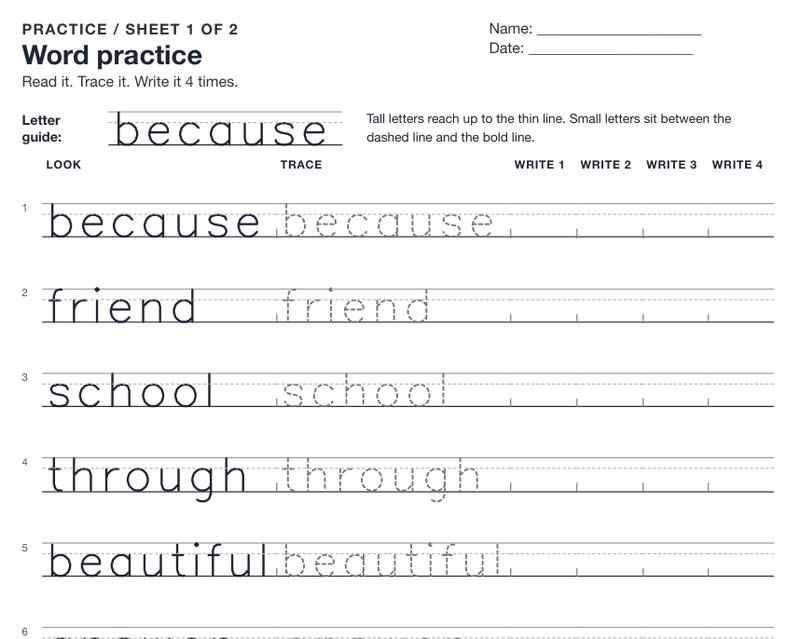
Six steps
How spelling practice works
-
Paste the spelling words
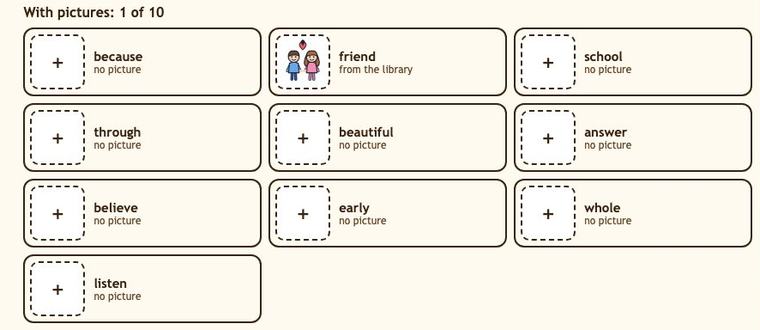
In 🎯 Test prep: a plain list, a table or “word - translation” lines. If all you have is a photo of the sheet, a ready request for ChatGPT turns it into words and draws a picture for each.
-
Set the test date
The game spreads the new words over the towers left, about one tower a day, so every word is met before the test.
-
From new word to spelling doors
A new word appears on a poster with its picture and is said aloud; further up, your child finds its door. Once the word is familiar, its doors show three spellings — the right one and two look-alike mistakes — and only the right one opens.
-
Hard words come back sooner
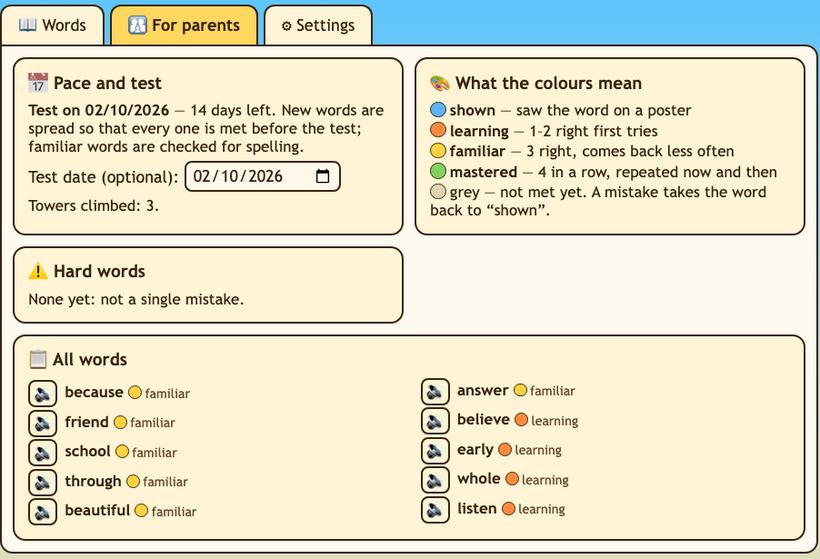
A wrong door stays shut and the word returns later. The parents' page lists the hard ones and shows every word as new, learning, familiar or mastered.
-
Print the practice sheets
“Practice sheets + home test” turns the list into paper: look at the word, trace it along the dotted line, then write it four times.
-
Give the home test
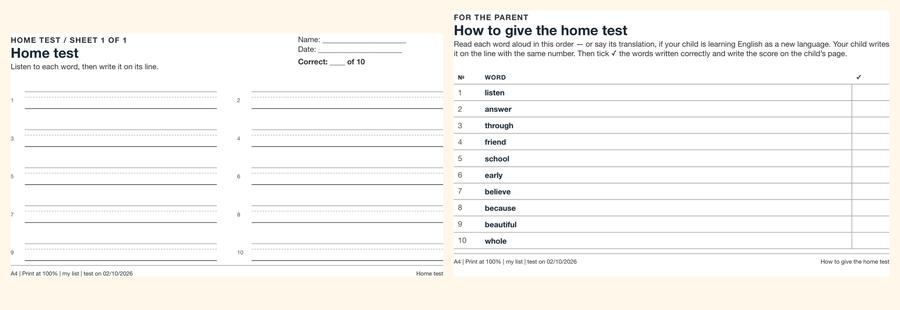
The last printed pages: numbered empty lines for your child, and a page for you with the same words in a shuffled order to read aloud and tick.
Your child goes to the spelling test prepared. The same list works for a vocabulary test or a weekly quiz.
Good to know
Spelling games without the stress
-
No timers
No jumps to time and no lives to lose: gaps are hopped by themselves, so the only challenge is the word.
-
A list per child
Brothers and sisters each keep their own spelling list, test date and progress on the same device.
-
Learning to read?
Younger children start with the sight word games: the Dolch and Fry lists, built in.
Before you start
Questions about spelling practice
What does the game do with our spelling words?
Each new word first appears on a poster and is said aloud, and your child finds its door. Once the word is familiar, its doors show three spellings, the right one and two look-alike mistakes, and only the right one opens.
What kind of mistakes are on the doors?
The ones children make: two letters swapped, a letter dropped, a letter doubled, a vowel changed.
What if the list has translations?
Lines like “word - translation” work too: the translation becomes the hint on the poster, which helps children who learn English as a new language.
What does the home test look like?
The last printed pages: numbered empty lines for your child, and a page for you with the same words in a shuffled order to read aloud and tick.
Does my child need an account?
No. The game works without signing up. Progress stays in the browser on your device.